
Why Do All AI-Generated Interiors Look the Same?
And what you can do right now to actually stand out.
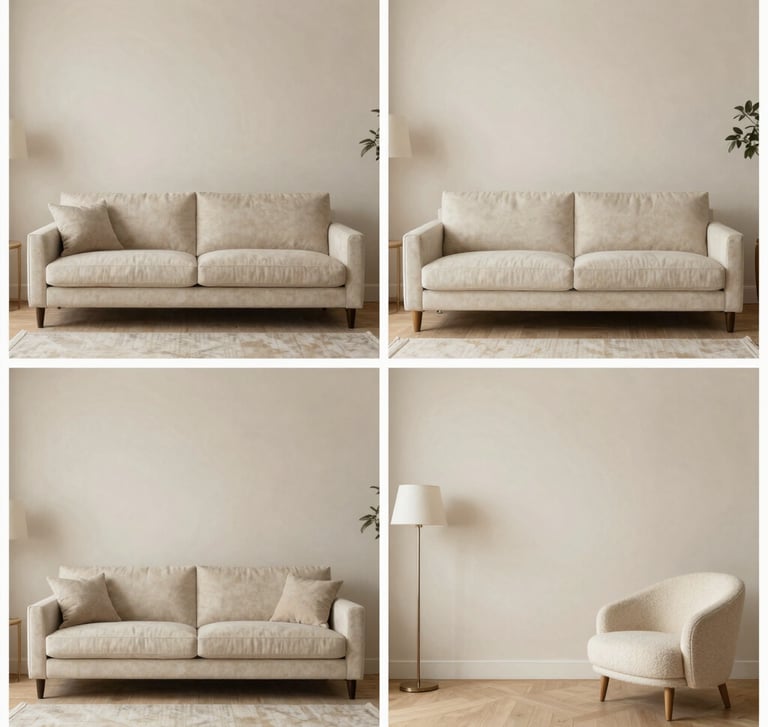
You've seen it. I've seen it. We've all seen it.
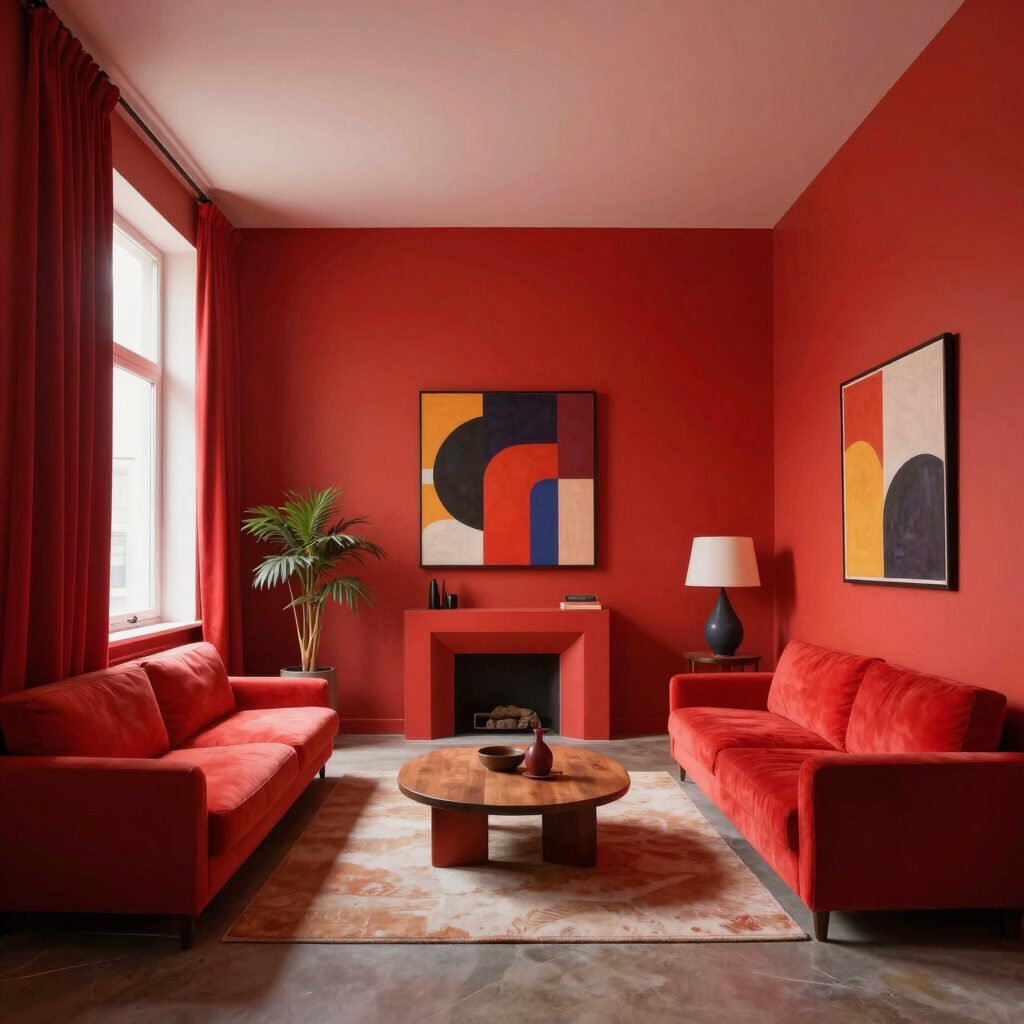
That beige living room with the curved sofa, the limewash wall, the linen throw, and the single sculptural vase on the coffee table. The neutral bedroom with the fluted panel headboard and the boucle armchair in the corner. The kitchen with warm white cabinets, unlacquered brass hardware, and a marble island that looks like it was designed by the same person — because, in a way, it was.
AI-generated interior visuals have flooded every platform — Instagram, Pinterest, Houzz, Behance — and they all look disturbingly alike. Not bad. Just... identical.
Why does this happen? And more importantly, what can you do about it if you're a designer, architect, or homeowner who actually wants something original?
Let's get into it.
1. AI Learns From What Already Exists — And What Already Exists Is Trending
Here's the blunt truth: AI image generators are trained on massive datasets of photos from the internet. And what's most represented on the internet? Whatever is most popular right now.
That means every time you type "luxury living room" into Midjourney or Stable Diffusion, you're essentially asking the model to average out the most-liked interiors on Pinterest and Instagram from the last two years. You're not asking it to imagine. You're asking it to remix what's already viral.
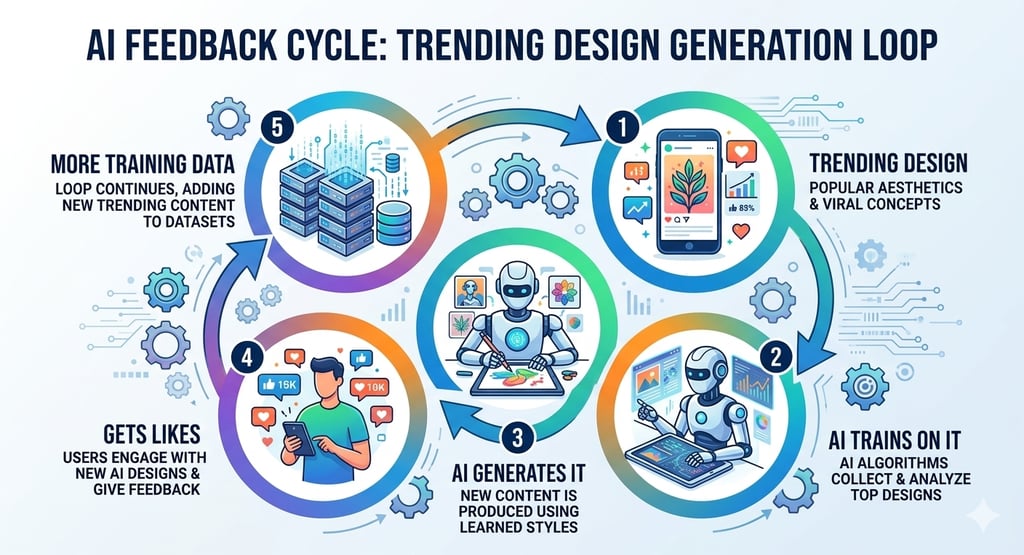
The result? A feedback loop. The AI generates what's trending. Designers share it. It gets more likes. The AI trains on it more. And the aesthetic loop tightens.
The algorithm isn't creative. It's statistical. It finds patterns in data and reproduces them. That's not a flaw — it's how the technology works. The flaw is in how we use it.
2. Most People Use the Same Prompts
Open any design community on Reddit or Facebook and you'll find posts like "what prompt should I use for a cozy bedroom?" And everyone shares the same 3-4 templates. Then everyone uses them. Then everything looks the same.
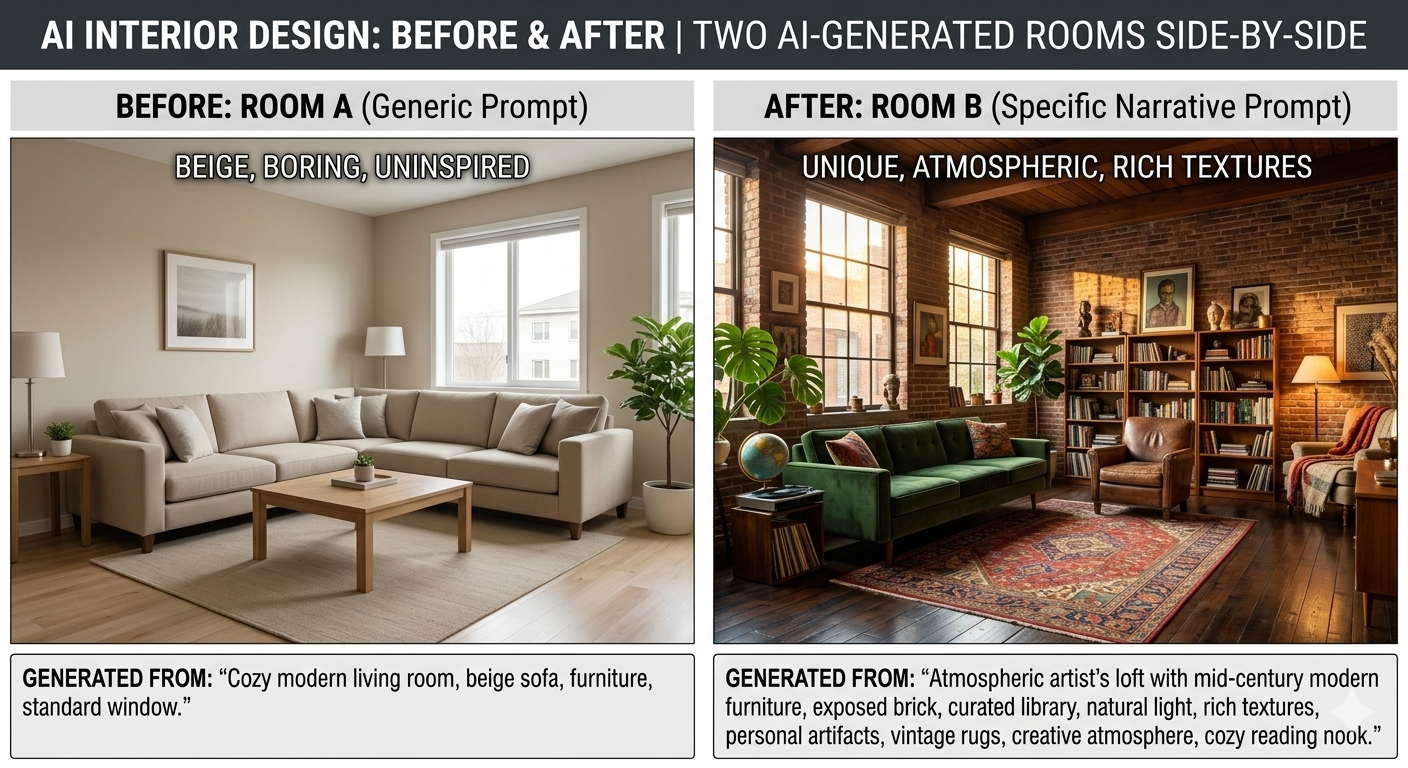
The typical generic prompt looks something like this:
"Modern luxury interior, warm tones, natural light, high-end furniture, photorealistic, 4K, architectural digest style"
That prompt is so generic it could produce a thousand different images and they'd all feel like the same room. There's no specificity, no tension, no personality.
Compare that to a prompt like:
"A Tehran-inspired living room in the 1970s, mixed with Scandinavian restraint — copper accents, hand-knotted rugs, concrete ceiling, soft afternoon light filtering through mashrabiya screens, shot on 35mm film"
Same AI. Completely different result. Because the input had a perspective.
3. The "Safe" Aesthetic Is a Dead End
There's a reason every AI interior defaults to warm neutrals, organic shapes, and quiet luxury. Those aesthetics test well. They get saves on Pinterest. They don't offend anyone.
But design that doesn't offend anyone also doesn't inspire anyone.
The most memorable interiors — the ones that get published in Wallpaper*, featured by AD, or remembered years later — have a point of view. They make a choice. They commit to something specific, even if it means some people won't like it.
Playing it safe with AI visuals doesn't just make your work look generic. It makes it look like everyone else's generic.
And in a market where clients have seen hundreds of AI renders, generic is exactly what they're trying to escape.
4. The Tools Weren't Built for Individuality-You Have to Force It
Midjourney, DALL-E, Adobe Firefly, Stable Diffusion — they were all built for general audiences. The default outputs are designed to please the most people possible. That's a commercial decision, not an artistic one.
If you want individuality, you have to engineer it into your process. That means:
• Using reference images from outside the mainstream design canon (vernacular architecture, forgotten 20th-century movements, regional crafts)
• Describing mood and narrative, not just objects ("the feeling of coming home after a decade abroad" vs. "cozy living room")
• Naming specific architects, photographers, or eras in your prompt to anchor the aesthetic
• Combining two contradictory styles that create productive tension
• Iterating through multiple generations and choosing the unexpected one, not the prettiest one
5. What the Best AI-Assisted Designers Are Doing Differently
The designers who are actually getting noticed using AI aren't treating it as a replacement for taste. They're using it as a fast prototyping tool for ideas they already have.
The workflow usually looks like this:
Step 1: Define the concept before opening any AI tool. What's the story? What's the client's life like? What should the space feel like at 7am versus 11pm?
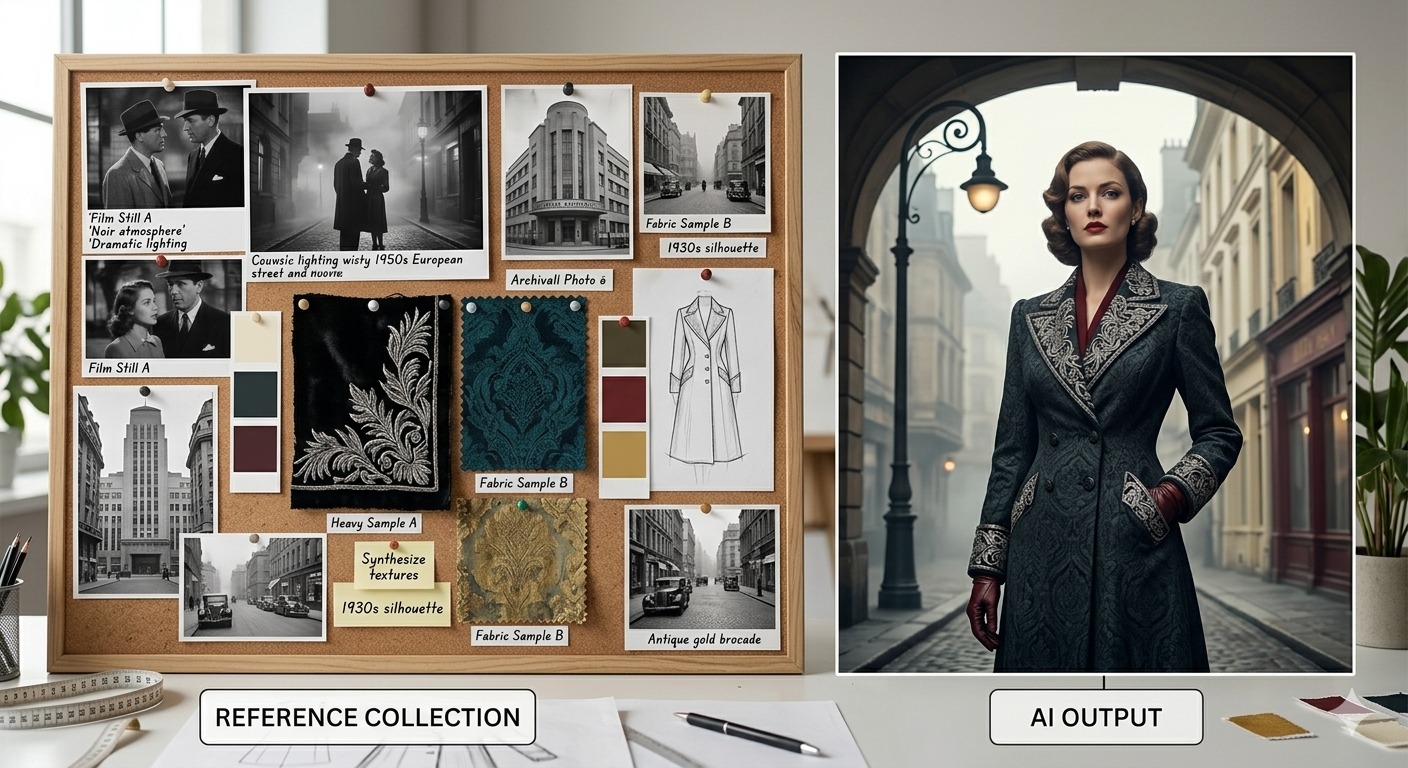
Step 2: Gather reference images from unexpected sources — film stills, archival photography, fabric swatches, regional architecture, art books.
Step 3: Write prompts that capture mood and specificity, not just object lists.
Step 4: Generate many variations quickly. Kill the obvious ones. Develop the strange, compelling ones.
Step 5: Layer human judgment, material knowledge, and spatial understanding on top. The AI gives you a visual starting point. You give it meaning.
That's not a software workflow. That's a design workflow that uses AI as a tool — not a crutch.
6. The Real Competitive Advantage Hasn't Changed
All of this brings us to something that the AI discourse loves to ignore: the designers who will thrive in the next decade aren't the ones who use AI the most. They're the ones who have the clearest point of view.
AI can generate images. It cannot generate conviction. It cannot generate the cultural references you've spent years absorbing. It cannot generate the intuition that comes from walking a space, talking to a client, or making a hundred mistakes over a career.
The homogenization of AI interiors is actually good news for designers who have developed a real perspective. Because the sea of sameness makes anything genuinely original stand out even more.
The question isn't whether to use AI. The question is: what do you bring to it that the algorithm can't replicate?
Tools Worth Having in Your Workflow
If you're building a serious AI-assisted design practice, these are the tools that actually make a difference:
Midjourney: midjourney.com — still the best for photorealistic interiors with strong aesthetic control
Adobe Firefly: adobe.com/firefly — best for integrating AI into an existing Photoshop/InDesign workflow
Canva Pro: canva.com — for quick moodboards and client presentations built around AI visuals
Chicspaces Prompt Library: chicspacesstudio.com/prompt-library
— — —
The Bottom Line
AI-generated interiors all look the same because most people are using the same tools, in the same way, with the same prompts, aiming for the same approval.
Break that loop and you break out of the sameness.
The technology isn't the limitation. The thinking is. Bring sharper thinking, and the AI gives you sharper results.
That's not a software update. That's a mindset shift. And it's available to you right now, today, with the tools you already have.
Found this useful? Share it with a designer who's stuck in the beige loop.
Chicspaces
Design faster without designing less.
Navigate
Get in touch
Support available Mon–Fri, 9–6 ET
Remote-first — serving designers worldwide